Meet the Designer of Abroad
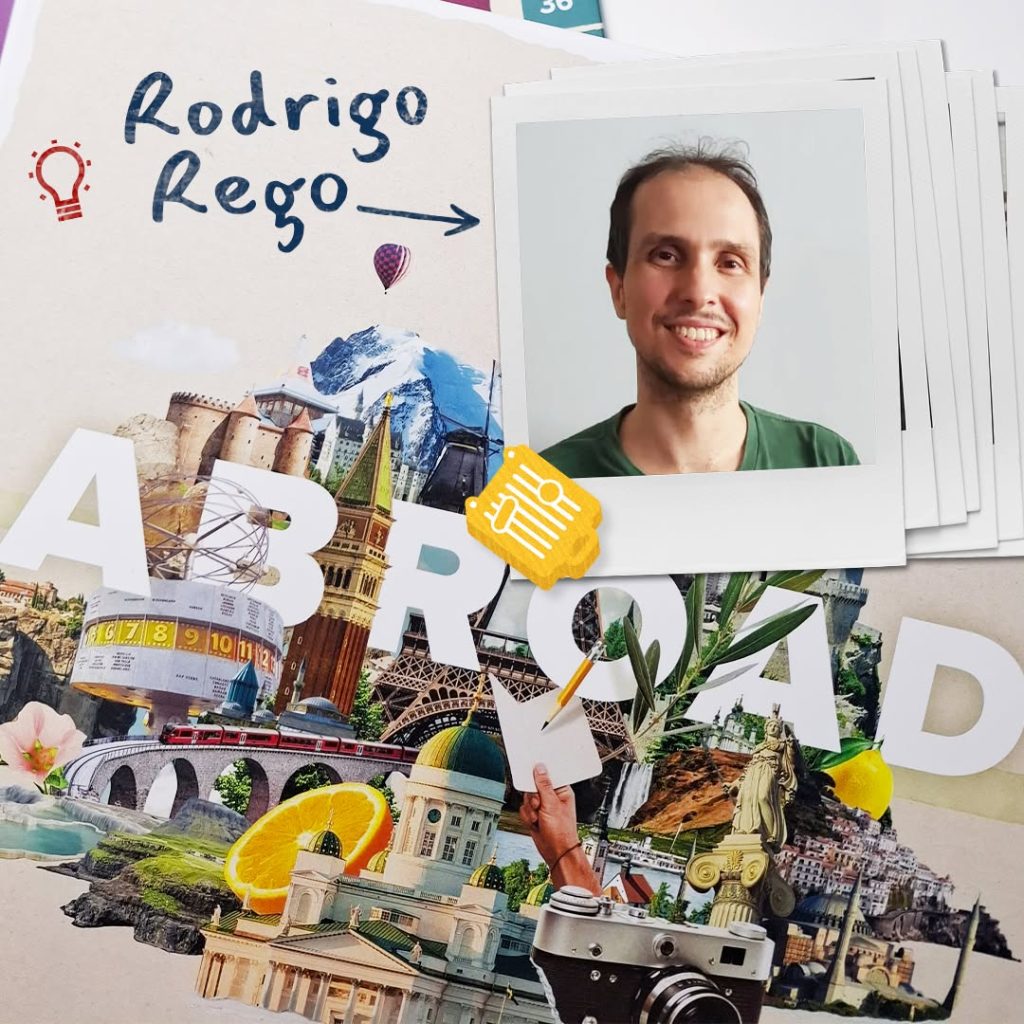
Please, introduce yourself and tell a few words about yourself.
Hello! I’m a game designer based in Rio de Janeiro, Brazil. I’ve been designing games since 2014, with my first one, Dead & Breakfast, published in 2018. Since then, I have had 17 games published, like Savernake Forest (Devir) and Superstore 3000 (Space Cowboys). I’m also a trivia aficionado. I organize pub quizzes for small groups, and have created many trivia games, the best known of them being “How Dare You?” fom Alion Games and Matagot.
Danilo and I met during the pandemic, when we both started migrating our prototypes to digital platforms. We both live in Brazil, but very far from each other, in different time zones even. Nevertheless, during Covid we relied on each other a lot for feedback on our games, until one day he came up with an original idea, which I helped mold into our first partnership, and first published game, 𝑳𝒂𝒏𝒅𝒎𝒂𝒓𝒌𝒔, from Floodgate Games.
What was the inspiration for creating Abroad?
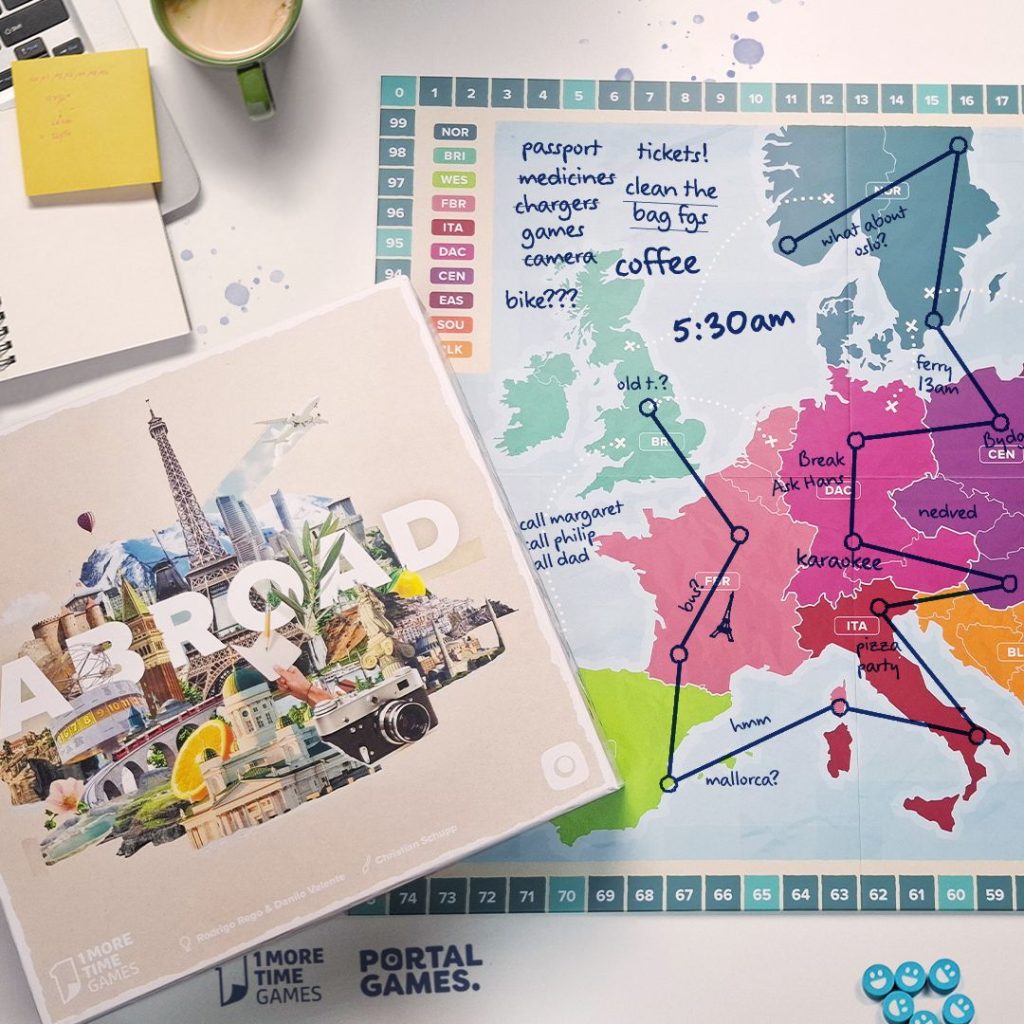
I love travelling. In 2023, me and my wife made our first big trip after the pandemic, 3 weeks in Vietnam and Cambodia. It was a wonderful vacation, but it took a lot of effort to plan how many days we’d spend in each location, what to do and how to travel between cities. I didn’t realize it while planning it, but during the trip, when my mind was rested, it became clear: there is a game that needs to be made with this!  And while there are many travel games, not many focus so deeply on the logistics of travelling: how to manage resources like time, energy and money, how best to optimize a journey from A to B while maybe and C and D that are in the way.The setting needed to be Europe, which has some of the most amazing and well-known natural and human-made sceneries in the world, that became the source of the vast deck of location cards the game has.But this was a big project for me: the scale of the games I created until then was much much smaller. Danilo was more experienced with bigger games then I, and we also just had a very successful partnership in Landmarks, so I invited him to join in, and I was glad when he accepted.
Which element of the game is most unique, interesting or satisfying in your opinion?
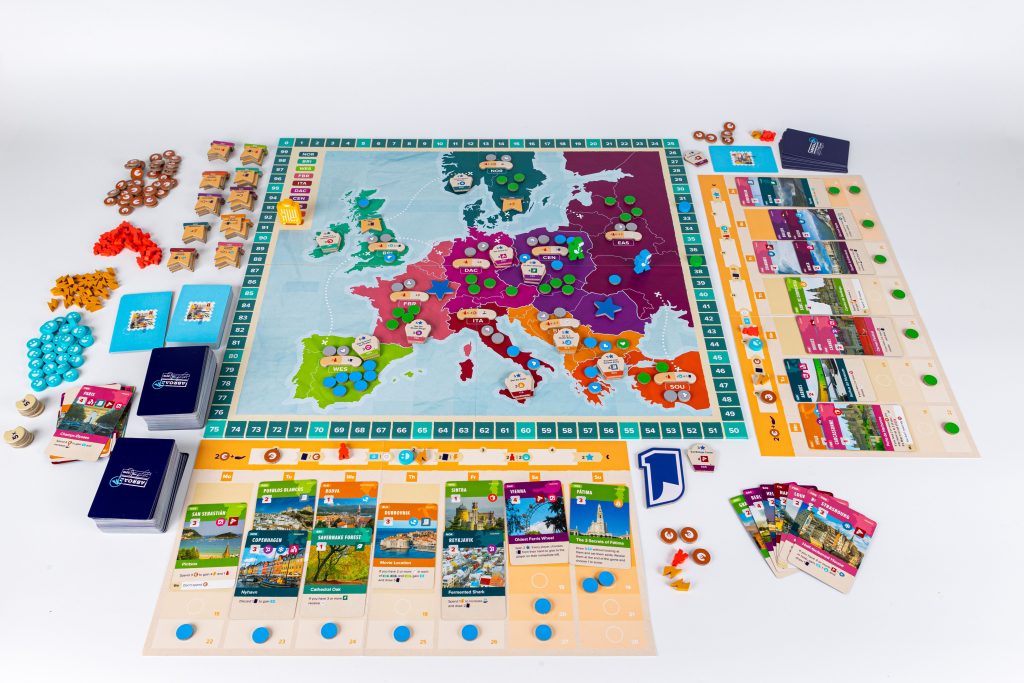
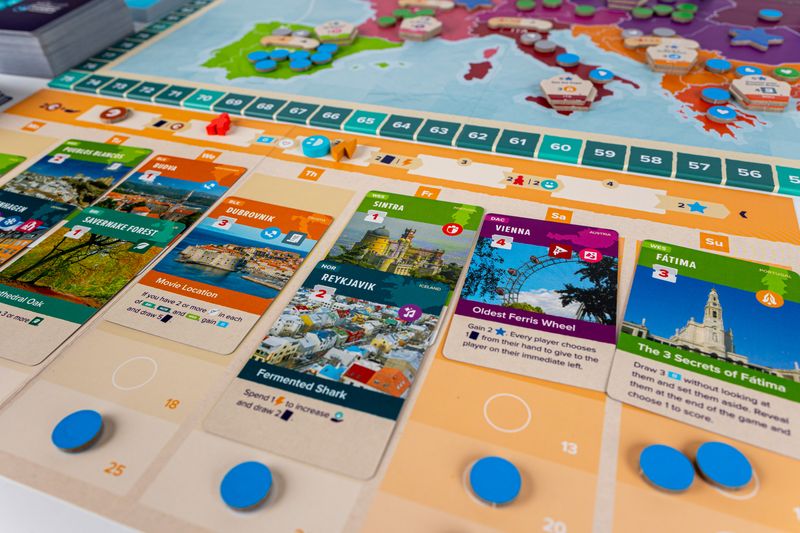
Thematically, I love that the cards are all familiar places, most of them people will have heard about. Many big deck games like Abroad are full of cards that represent abstract concepts, weird events or futuristic technologies. In Abroad, because you know the places, there’s a real sense of actually making a trip, and maybe even bringing memories of places you might have visited if you’ve been to Europe. And because you place each card in a calendar board, occupying the days of the week, you can look back afterwards and tell people how your trip was.Mechanically, I love the insider tip mechanism that allow for big swings in the area majorities. This solved a problem Abroad had: in most area majority games, there are 2 vectors for trying to get ahead: the number of markers you’ve placed on the board, and where you placed them. In Abroad, you count area majority points after every week, so all players will have placed the same number of days on the board. Because of that, there’s only 1 vector: the where. Insider tips solved this. If you flip a single day to its insider tip side, it will win over any amount of unflipped days other players placed in a region. So even having placed the same number of days, the insider tips make them have different values, which made fighting for majorities much more interesting.
Which city or region presented on one of the cards you’d like to visit?
Thematically, I love that the cards are all familiar places, most of them people will have heard about. Many big deck games like Abroad are full of cards that represent abstract concepts, weird events or futuristic technologies. In Abroad, because you know the places, there’s a real sense of actually making a trip, and maybe even bringing memories of places you might have visited if you’ve been to Europe. And because you place each card in a calendar board, occupying the days of the week, you can look back afterwards and tell people how your trip was.Mechanically, I love the insider tip mechanism that allow for big swings in the area majorities. This solved a problem Abroad had: in most area majority games, there are 2 vectors for trying to get ahead: the number of markers you’ve placed on the board, and where you placed them. In Abroad, you count area majority points after every week, so all players will have placed the same number of days on the board. Because of that, there’s only 1 vector: the where. Insider tips solved this. If you flip a single day to its insider tip side, it will win over any amount of unflipped days other players placed in a region. So even having placed the same number of days, the insider tips make them have different values, which made fighting for majorities much more interesting.